መፈወሱ is the result of thousands of years of metalworking development, from hand hammering hot metal into crude tools to automated presses, controlled heating systems, precision dies, and digital process monitoring. The essential idea is the same, though plastic deformation is employed to shape the metal. The equipment, materials, tooling and quality control techniques used today are far more complex than those used by early metalworkers. Forging is not just a classic metal-forming process for today’s industries. It is a controlled manufacturing technique used to make components that demand reliable mechanical qualities, dimensional consistency and resilience to severe service conditions. Forged components find extensive use in automotive drivetrains, aircraft structures, oil and gas equipment, power generation systems, heavy machinery and other industrial applications. Understanding how forging developed can allow procurement teams to better evaluate vendors. A supplier that can make a forged component should not be evaluated just on whether they have a press or hammer. Engineering support, material traceability, tooling capability, heat treatment, inspection methods and production control determine the ultimate quality of a forged part.
From Early Metalworking to Industrial Forging
The first development in metalworking was the working of naturally occurring metals and the slow discovery that heat and mechanical force could be employed to modify their shape. Early artisans used crude hammers, anvils and fires. As the expertise of metallurgy increased, copper, bronze and then finally iron became more and more essential.
As iron and steel came into wider usage, forging emerged as a viable process for producing tools, weaponry, agricultural equipment, fasteners and mechanical parts. Blacksmiths gained experience to control the heating temperatures, hammering sequences and cooling conditions. These procedures were mostly done by hand but developed many of the basic concepts that still apply to current forging.
The internal structure of metal may be manipulated via controlled deformation, and this has long been one of the most essential features of forging. As opposed to removing material from a solid block, forging affects the contour of the work piece and influences the flow of the grain. Later this feature was one of the key justifications for choosing forged components for applications with high mechanical loads.
How Did the Industrial Revolution Change Forging?
The Industrial Revolution brought about tremendous changes in forging manufacturing. Steam hammers and mechanical presses enabled manufacturers to apply far greater and more consistent forces than individual craftsmen could.
This adjustment was significant for various reasons. Larger workpieces could be machined, production speeds rose, and manufacturing results were less dependent on the physical strength of an individual operator. The use of mechanical equipment also made it easier to establish more uniform forming sequences for components produced in bigger quantities.
The development of forging was progressively influenced by the growth of the railways, machinery production, shipbuilding and industrial equipment during this period. The increase in steel output gave manufacturers access to materials with more predictable mechanical properties and compositions, which created additional options for industrial forging.
The Shift Towards Controlled and Automated Production
The 20th century witnessed the introduction of hydraulic presses, better mechanical presses, more powerful forging hammers, and more advanced die-making technologies. These methods expanded the size and geometry range of parts that could be fabricated.
Later computer-aided engineering modified how forging processes were designed. Before any actual manufacturing took place engineers could look at the flow of material, the forming forces, the filling of dies, and the probable trouble spots. Computer numerical control also made improved machined dies and other tooling parts.
Modern forging operations can include temperature sensors, force monitoring, automated material handling, programmable press controls, and digital inspection systems. Such improvements have not supplanted the basic principles of forging but have made those principles easier to control and replicate on an industrial scale.
Major Forging Processes Used Today
Modern forging is not one kind of production method. Depending on the material, the geometry of the part, the volume to be produced, the tolerances to be achieved and the equipment available, different techniques are used.
Hot Forging for Large and Highly Deformable Components
Hot forging is carried out after the work item is heated to an appropriate temperature to induce plastic deformation. That is material grade and procedure dependent. Not one value. The right temperature range.
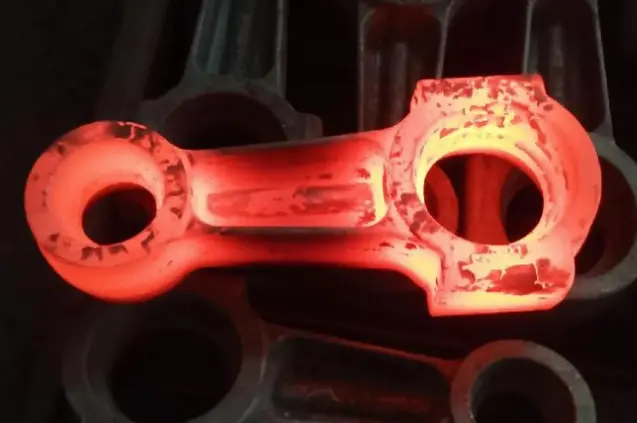
Heating decreases the force needed to bend many metals and allows large modifications of cross-section and shape. Hence, hot forging is applicable for parts such as shafts, crankshafts, connecting rods, gears, flanges and other parts with large deformation.
Temperature control is especially crucial. Too much heat causes undesired material conditions, whereas too little heat results in increased forming loads and die filling. Thus, the operation of the furnace, the transfer time, the speed of forming and the design of the die must be coordinated for hot forging in industry.
Cold Forging for Precision Components
Cold forging is performed at or near room temperature and is commonly employed when excellent dimensional precision and surface quality are required. Since the material is not heated to forging temperatures, the procedure might generate considerable work hardening.
Cold forging is often used to make small parts in large quantities, such as fasteners, automobile parts, shafts and other precision-formed goods. But the higher forming forces involved call for careful consideration of the material selection, die strength, lubrication and equipment capability.
Open-Die and Closed-Die Forging
Open-die forging is the deformation of a workpiece between two very basic dies which do not entirely enclose the material. It is often utilised for huge parts, bespoke shapes and very low-volume production. The technique may be made very flexible because the workpiece can be controlled by several shaping operations.
Closed-die forging: The workpiece is contained in the dies, and the dies are shaped while deformation occurs. The die cavity controls the final geometry and enables manufacturers to build more complicated designs with reproducible dimensions. This strategy is very useful for medium- and high-volume production.
Impression-die forging is very much like closed die production and is often used for engineered parts requiring a controlled flow of material. The open die versus closed die approach depends on part geometry, volume, tooling investment, material and dimensional requirements.
How a Modern Forging Process Is Controlled?
A reliable forged part is not the product of a single forming operation but of many regulated phases. The ultimate dimensions and mechanical qualities can be affected at each step.
የቁሳቁስ ዝግጅት እና ማሞቂያ
The production starts with the selection and preparation of the right raw material. Depending on the application, this may be a billet, bar, bloom or other suitable beginning form.
Material identity and traceability should be established prior to production. The work piece is then heated to the needs of the particular alloy and forging process. Temperature monitoring is vital since the material needs to be within an adequate processing window during deformation.
Forming, Trimming, and Finishing
When the workpiece is prepared to the necessary state, it is transferred to the መፍረስ equipment. The material is deformed in one or several deformation phases.
Depending on the process, other operations that may follow include trimming, piercing, straightening, sizing, shot blasting, machining or removal of surplus material. The choice of these processes is determined by the component drawing and final dimensions.
Heat Treatment and Final Inspection
Heat treatment may be necessary to get the desired microstructure and mechanical characteristics. Typical procedures include normalisation, annealing, quenching and tempering, depending on the material and application.
After heat treatment, manufacturers can carry out dimensional inspection, hardness testing, mechanical testing and non-destructive testing according to the customer or applicable standard. Ultrasonic testing is used to inspect interior conditions for appropriate applications, and magnetic particle testing is typically used to detect surface and near-surface defects in ferromagnetic materials.
Why Forged Components Are Used for Demanding Applications
The progress of forging is directly associated with the performance demands of modern engineering.
ቁጥጥር የሚደረግበት የእህል ፍሰት እና ሜካኒካል አፈጻጸም
The grain structure of the material can be orientated during deformation such that it tends to follow the general shape of the component. This regulated grain movement might result in favourable mechanical properties, especially when the component is meant to carry repetitive or concentrated stresses.
The qualities of a forged part depend on a number of elements such as the alloy composition, amount of reduction, forging temperature, sequence of deformation, heat treatment and subsequent machining operations. So forging should not be an automatic guarantee of better performance. The entire manufacturing process controls the outcome.
Reduced Internal Discontinuities
Properly regulated forging can decrease or eliminate some internal discontinuities associated with the initial condition of the material. Forging, however, cannot eliminate all probable defects, and process design is still important.
The integrity of the completed component is affected by material quality and reduction in forging, temperature control, die design and inspection. For important applications, manufacturers can include forging as well as ultrasonic testing, magnetic particle testing, radiographic examination, dimensional inspection and mechanical testing as applicable.
Suitable for Critical Load-Bearing Components
When a component has to withstand mechanical loading for a long service life, forging is a common choice. Applications include automotive drivetrain parts, aeroplane components and industrial shafts, pressure equipment and heavy machine components where material integrity and predictable mechanical qualities are critical factors.
However, the decision on the suitable manufacturing method should be based on the actual design and service requirements of the component. There are cases where casting, machining, fabrication and forging are technically appropriate.
Common Forging Defects and How Manufacturers Control Them
Forging quality depends on controlling both the process and the material. Defects can originate from raw material, improper heating, incorrect die design, inadequate deformation, poor handling, or unsuitable heat treatment.
Surface Cracks and Folding
Surface cracking can occur when deformation conditions exceed the material's processing limits or when temperature control is inadequate. Folds and laps may also develop when material flows improperly during forming.
Manufacturers reduce these problems through appropriate die design, controlled heating, correct forming sequences, and process monitoring. Tooling condition also matters because damaged or incorrectly maintained dies can influence material flow.
የመለኪያ ልዩነት
Dimensional variation can result from die wear, inconsistent billet temperature, changes in material volume, forming conditions, or inadequate process control. For components with tight tolerances, final machining may be required after forging.
Regular dimensional inspection and statistical process monitoring can help manufacturers identify process drift before it affects a large production batch.
Internal Discontinuities
Internal discontinuities may not be visible during ordinary visual inspection. For applications where internal integrity is important, non-destructive testing can provide additional information.
The appropriate inspection method should be selected according to the material, geometry, specification, and defect type being investigated. A qualified supplier should be able to explain why a particular testing method is appropriate rather than simply listing inspection equipment.
What Procurement Teams Should Evaluate When Buying Forged Parts?
The historical development of መፍረስ has created a much more complex supply chain than traditional blacksmithing. Today, purchasing teams need to evaluate the entire manufacturing capability rather than the forming machine alone.
የምህንድስና እና የመሳሪያ አቅም
A capable supplier should be able to review drawings, tolerances, material specifications, and production requirements before quoting a project. For closed-die work, die design and tooling manufacture can have a significant effect on both cost and production consistency.
Buyers should ask whether the supplier can provide design-for-manufacturing feedback, tooling recommendations, process drawings, and sample approval support when required.
Material Traceability and Quality Documentation
Material certificates, heat numbers, production records, and inspection reports can be important for industrial components. Traceability requirements vary according to the application and customer specification, but suppliers should have a documented system for connecting raw material to finished parts.
For regulated or safety-critical applications, buyers may also require mechanical test results, heat-treatment records, non-destructive testing reports, dimensional inspection records, or certificates of conformity.
የማምረት አቅም እና የመሪነት ጊዜ
A supplier's nominal machine capacity does not necessarily represent its available production capacity. Procurement teams should consider current workload, tooling requirements, material availability, heat-treatment capacity, inspection resources, and finishing operations.
Lead time should therefore be discussed as a complete production cycle, including engineering review, tooling, raw-material preparation, forging, heat treatment, machining, inspection, and packaging.
How Is Forging Technology Evolving?
The development of forging continues as manufacturers combine established forming principles with digital technologies, automation, improved materials, and more efficient production systems.
Digital Process Monitoring
Modern production equipment can collect information such as forming force, temperature, cycle time, and equipment status. This data can help engineers identify process variations and improve repeatability.
Simulation software is also increasingly useful during process development. Engineers can evaluate material flow and forming behaviour before committing to production tooling, potentially reducing the number of physical trials required.
አውቶሜሽን እና ስማርት ማምረት
Automated billet handling, robotic transfer systems, programmable presses, and automated inspection can improve production consistency while reducing manual handling.
These systems are particularly valuable in high-volume production environments where cycle-to-cycle repeatability is important. However, automation does not remove the need for experienced process engineers. Equipment still has to be correctly programmed, maintained, and validated against the component requirements.
የቁሳቁስ እና የኢነርጂ ውጤታማነት
Energy consumption is an important consideration because many hot forging operations require substantial heating. Manufacturers are therefore exploring more efficient furnaces, improved temperature control, optimised forming sequences, and better heat recovery.
Material utilisation is also important. Optimised forging design can reduce machining allowances and unnecessary material removal. In high-volume manufacturing, even a small reduction in material waste can have a meaningful effect on total production cost.
መደምደሚያ
የ ልማት መፍረስ has transformed a traditional craft based on hammers, anvils, and manually controlled heating into a highly engineered manufacturing process supported by hydraulic and mechanical presses, precision tooling, computer-aided engineering, automated production, heat treatment, and non-destructive testing. The basic principle of plastic deformation remains unchanged, but the level of process control has advanced significantly. Modern manufacturers can select hot forging, cold forging, open-die forging, closed-die forging, and related processes according to material, geometry, production volume, and performance requirements. For procurement professionals, understanding this development provides a practical basis for supplier evaluation. Instead of considering only price or equipment size, buyers should examine engineering capability, material traceability, tooling expertise, heat treatment, inspection procedures, production capacity, documentation, and delivery performance. As digital manufacturing and energy-efficient production continue to develop, forging will remain an important manufacturing route for engineered metal components. The most effective sourcing decisions come from matching the right process and supplier capabilities to the actual requirements of the component.
በየጥ
1. What is the historical development of forging?
Forging developed from early metalworking practices in which craftsmen used heat and mechanical force to shape metals. The Industrial Revolution introduced steam hammers and mechanical presses, followed by hydraulic equipment, precision tooling, computer-controlled machinery, simulation, and automated process monitoring. Modern forging combines these technologies with controlled heat treatment and inspection.
2. What is the difference between hot forging and cold forging?
Hot forging uses an elevated temperature appropriate for the material and process, which generally makes substantial deformation easier. Cold forging takes place at or near room temperature and can provide good dimensional accuracy and work hardening. The appropriate method depends on material, geometry, required properties, production volume, and tooling considerations.
3. Why are forged components used in industrial applications?
Forged components can provide useful mechanical characteristics because controlled deformation can influence grain flow and material structure. Forging is therefore widely used for components subjected to significant mechanical loads. The final performance depends on the alloy, forging process, heat treatment, inspection, and component design.
Partner With Welong for Custom Forging Projects
Welong supports customers looking for customised forged and machined metal components with engineering communication, quality management, production coordination, and international supply chain experience. Whether you are sourcing components for automotive equipment, industrial machinery, oil and gas applications, aerospace-related projects, or other demanding uses, providing your drawing or sample together with the required material grade, dimensions, quantity, and inspection requirements allows the manufacturing team to evaluate the project more efficiently. For a custom መፍረስ project, the right starting point is a clear technical specification and a supplier capable of connecting engineering, production, quality control, and delivery into one coordinated process. Contact us at info@welongpost.com የእርስዎን ልዩ ፍላጎቶች ለመወያየት እና ብጁ የፎርጂንግ አቅማችን የአቅርቦት ሰንሰለት አፈጻጸምዎን እንዴት እንደሚያሻሽል ለማወቅ።
ማጣቀሻዎች
1. ስሚዝ፣ ጆን ኤ. "የፎርጂንግ ቴክኖሎጂ ዝግመተ ለውጥ፡ ከጥንታዊ የእጅ ሥራ ወደ ዘመናዊ ማኑፋክቸሪንግ።" የማምረቻ ታሪክ ጆርናል፣ ጥራዝ 45፣ 2023፣ ገጾች 123-145።
2. አንደርሰን፣ ማሪያ አር. "በኢንዱስትሪ አፕሊኬሽኖች ውስጥ የሙቅ እና የቀዝቃዛ ፎርጂንግ ሂደቶች ንፅፅር ትንተና።" ኢንተርናሽናል ፎርጂንግ ሪሰርች ኢንስቲትዩት፣ 2022፣ ገጽ 67-89።
3. ቼን፣ ዌይ እና ቶምፕሰን፣ ሮበርት ኬ. "በዘመናዊ የፎርጂንግ ስራዎች ውስጥ የጥራት ቁጥጥር ስርዓቶች፡ ምርጥ ልምዶች እና ደረጃዎች።" የማምረቻ ጥራት ግምገማ፣ ጥራዝ 38፣ 2023፣ ገጾች 201-218።
4. ዊሊያምስ፣ ሳራ ኤል. "በብረት መቅረጽ ውስጥ ዲጂታል ትራንስፎርሜሽን፡ በፎርጂንግ ውስጥ የኢንዱስትሪ 4.0 አፕሊኬሽኖች።" የላቀ የማኑፋክቸሪንግ ቴክኖሎጂ ሩብ ዓመት፣ ጥራዝ 29፣ 2023፣ ገጽ 45-62።
5. ጋርሲያ፣ ካርሎስ ኤም. "በፎርጂንግ ማኑፋክቸሪንግ ውስጥ ዘላቂ ልምዶች፡ የአካባቢ ተጽዕኖ እና የኢነርጂ ቅልጥፍና" ግሪን ማኑፋክቸሪንግ ጆርናል፣ ጥራዝ 15፣ 2022፣ ገጽ 88-105።
6. ኩማር፣ ራጄሽ እና ፒተርሰን፣ ሊንዳ ጄ. "ለተጭበረበሩ ክፍሎች የግዥ ስልቶች፡ የአደጋ አስተዳደር እና የአቅራቢዎች ምርጫ።" የአቅርቦት ሰንሰለት አስተዳደር ግምገማ፣ ጥራዝ 31፣ 2023፣ ገጽ 134-151።